

Article · UNDERSTAND
What actually changes after forty
Recovery, tendon tolerance and body composition all shift. None of them mean training less — they mean training more precisely.
UNDERSTAND · Article
Muscle is not vanity. It is the tissue that carries metabolic health, bone density and independence into the second half of life.
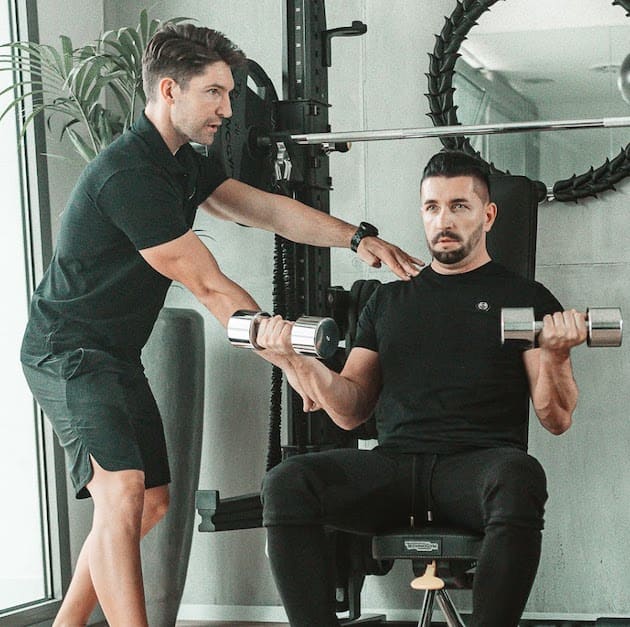
From roughly the fourth decade, muscle mass and — more importantly — muscle power decline unless something is actively done about it. The loss is slow enough to be invisible year to year and obvious across twenty.
What makes strength training unusual is how many separate systems it touches. Muscle is the largest site of glucose disposal in the body. Loading is the primary signal that maintains bone. Force production is what keeps a stumble from becoming a fall.
None of this requires heroic training. Two or three properly structured sessions a week, held for years, outperforms any intense block that ends in March.
The practical version: train the five basic patterns, add load slowly, eat enough protein, sleep, and do not stop when life gets busy — reduce the dose instead.
“The goal is not to peak. It is never to fall below the line.”
Continue